
Quick Answer: EST vs EDT
EST (Eastern Standard Time) is used during standard winter hours, while EDT (Eastern Daylight Time) is used during daylight saving summer hours. EST operates at an offset of **UTC-5**, active from early November to mid-March. EDT operates at an offset of **UTC-4**, active from mid-March to early November. Both refer to the same geographic region on the East Coast of North America, shifting by exactly one hour twice a year.
Guide Contents
- 1. EST vs EDT Comparison Infographic
- 2. What is EST (Eastern Standard Time)?
- 3. What is EDT (Eastern Daylight Time)?
- 4. Side-by-Side Comparison Table
- 5. Why Do EST and EDT Exist?
- 6. When Does EST Change to EDT? (DST Schedule)
- 7. Which U.S. States Observe EDT?
- 8. Real-Life Coordination Examples
- 9. Common Timezone Mistakes & Pitfalls
- 10. EST vs EDT vs ET Explained
- 11. Frequently Asked Questions (FAQ)
- 12. Summary & Call to Action
1. EST vs EDT Comparison Infographic
Understanding the seasonal shift between Eastern Standard Time and Eastern Daylight Time is much easier with a visual breakdown. The infographic below highlights the core differences.
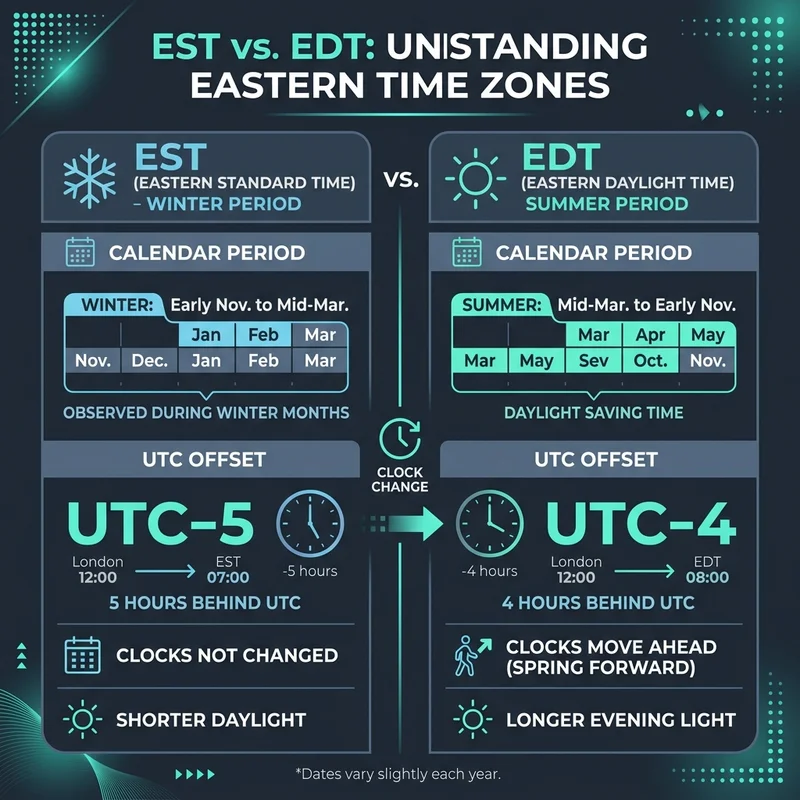
Figure 1: Side-by-side comparison infographic outlining the conceptual difference between EST and EDT.
As demonstrated, the transition shifts the region's clocks by exactly one hour, moving from UTC-5 (standard winter) to UTC-4 (daylight summer) to align with seasonal daylight patterns.
2. What is EST (Eastern Standard Time)?
Eastern Standard Time (EST) is the standard time observed in the Eastern Time Zone of North America during the winter months. It operates at an offset of **UTC-5** (five hours behind Coordinated Universal Time). When it is 12:00 PM UTC, it is 7:00 AM EST on the East Coast.
EST is observed in seventeen U.S. states in their entirety, parts of six other states, and several provinces of eastern Canada. The winter standard begins on the first Sunday in November and continues until the second Sunday in March.
Major cities that follow Eastern Standard Time during winter include New York, Toronto, Montreal, Washington D.C., Boston, Atlanta, and Miami. In addition to North America, some Caribbean nations, such as Jamaica and Panama, observe EST year-round without daylight saving adjustments.
3. What is EDT (Eastern Daylight Time)?
Eastern Daylight Time (EDT) is the daylight saving time offset observed in the Eastern Time Zone during the summer months. It operates at an offset of **UTC-4** (four hours behind Coordinated Universal Time). When it is 12:00 PM UTC, it is 8:00 AM EDT.
EDT is active from the second Sunday in March to the first Sunday in November. By moving clocks forward by one hour during the warmer months, communities extend evening daylight hours, reducing energy consumption and encouraging outdoor activities.
Because EDT is a daylight saving offset, it is not observed in countries that remain on permanent standard time. For instance, while New York and Toronto switch to EDT, Caribbean nations like Jamaica stay on UTC-5 year-round, resulting in a temporary one-hour time difference during the summer.
4. Side-by-Side Comparison Table
Although EST and EDT apply to the exact same geographic region, their seasonal cycles and offsets are governed by distinct rules:
| Feature | Eastern Standard Time (EST) | Eastern Daylight Time (EDT) |
|---|---|---|
| Offset | UTC-5 (5 hours behind Greenwich) | UTC-4 (4 hours behind Greenwich) |
| Season | Winter / Cold months | Summer / Warm months |
| Active Period | November to March | March to November |
| Daylight Saving Status | Standard Time (DST is inactive) | Daylight Saving Time (DST is active) |
| Clock Direction | Clocks fall back 1 hour in November | Clocks spring forward 1 hour in March |
| Major Cities | New York, Toronto, Washington DC, Boston | New York, Toronto, Washington DC, Boston |
| Caribbean Usage | Observed year-round by Jamaica and Panama | Not observed in Jamaica or Panama |
| Common Abbreviation | EST | EDT |
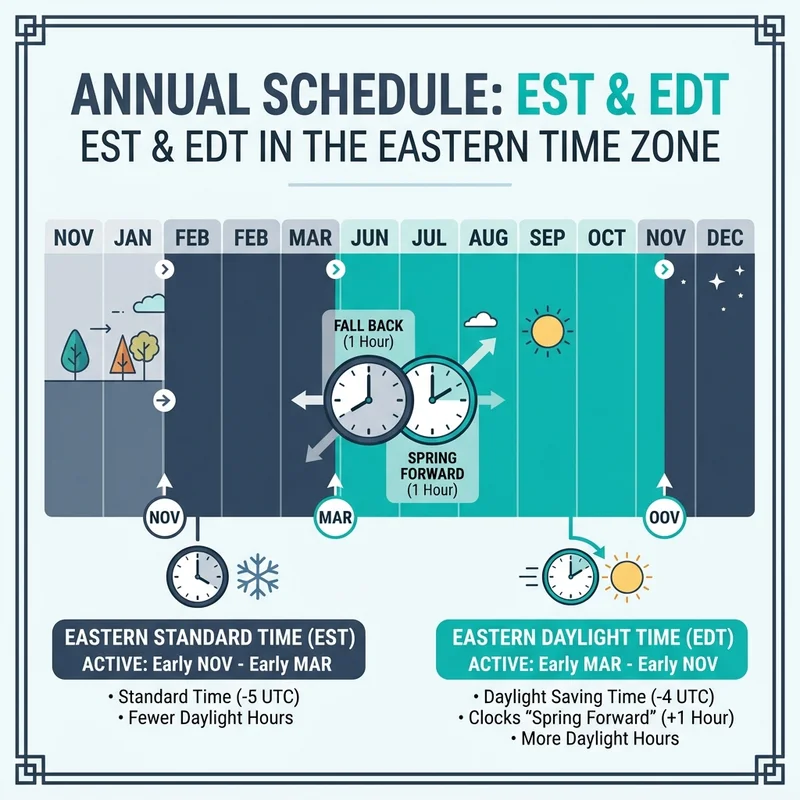
Figure 5: Seasonal calendar illustrating the active months of Eastern Standard Time and Eastern Daylight Time.
As shown in the calendar graphic, Eastern Daylight Time (EDT) occupies the majority of the year (approximately 34 weeks), while Eastern Standard Time (EST) occupies the remaining winter weeks (approximately 18 weeks).
5. Why Do EST and EDT Exist?
The existence of EST and EDT is directly tied to the history of Daylight Saving Time. The concept was first proposed by Benjamin Franklin in 1784 as a satirical suggestion to save candles. It was later formally proposed by New Zealand entomologist George Hudson in 1895, who wanted more daylight hours to collect insects after his shift.
The United States first adopted daylight saving time during World War I to conserve coal. The practice was codified into federal law under the Standard Time Act of 1918. During World War II, the nation enacted permanent daylight saving time (known as "War Time") to save fuel.
Today, daylight saving rules are regulated by the **Uniform Time Act of 1966**. The law established a standardized schedule for clock transitions across the nation, ensuring that transportation schedules and business communications could operate consistently.
6. When Does EST Change to EDT? (DST Schedule)
The transition between Eastern Standard Time and Eastern Daylight Time occurs twice a year on a standardized calendar schedule:
- Spring Forward (EST to EDT): On the second Sunday of March, at 2:00 AM local time, clocks are moved forward by one hour to 3:00 AM. This transition marks the beginning of EDT.
- Fall Back (EDT to EST): On the first Sunday of November, at 2:00 AM local time, clocks are moved back by one hour to 1:00 AM. This transition marks the end of EDT and the return to EST.
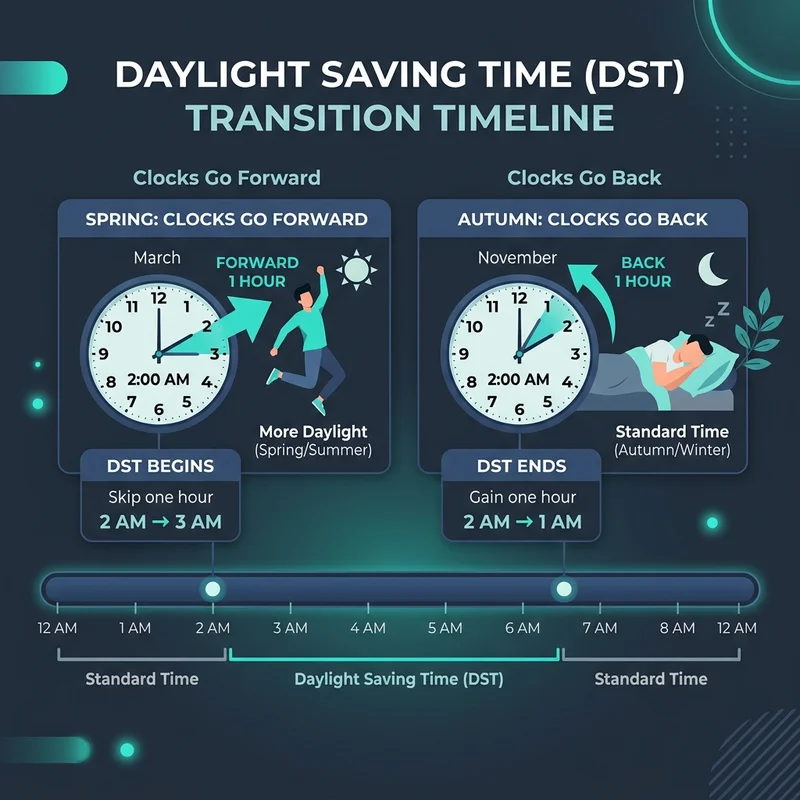
Figure 2: Timeline detailing the exact schedule of daylight saving clock transitions.
This timeline shows the spring transition in March (losing one hour of sleep but gaining evening daylight) and the autumn transition in November (gaining one hour of sleep as standard time returns).
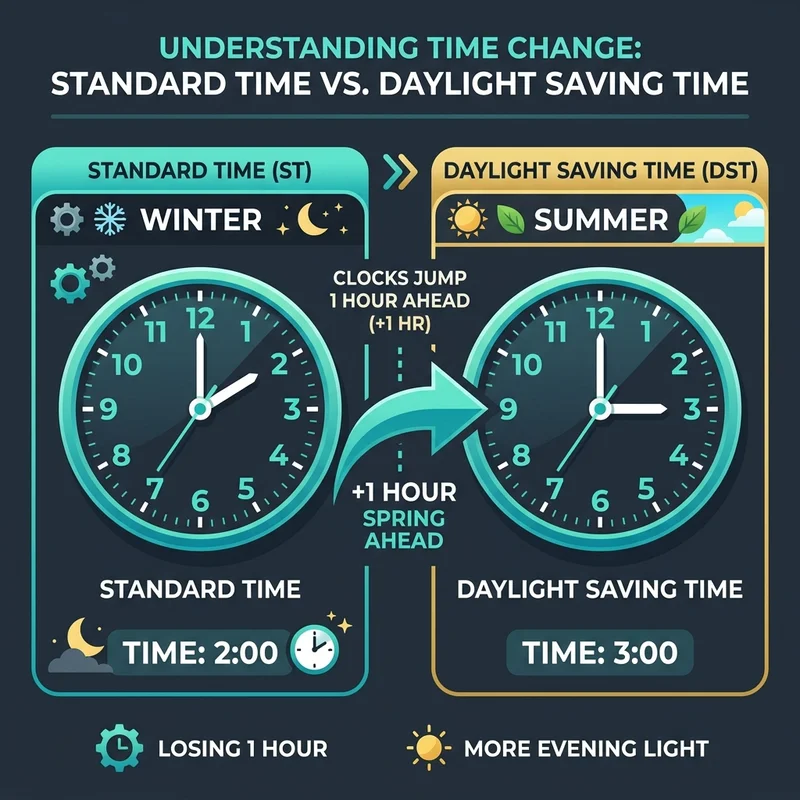
Figure 4: Clock graphic illustrating the one-hour clock shift during DST transitions.
As shown, the transition occurs in the early morning hours (2:00 AM) to minimize disruption to commercial activities, transportation networks, and daily routines.
7. Which U.S. States Observe EDT?
Most states located in the Eastern Time Zone observe both Eastern Standard Time and Eastern Daylight Time. The map below outlines the geographic reach of the zone and its regional divisions.
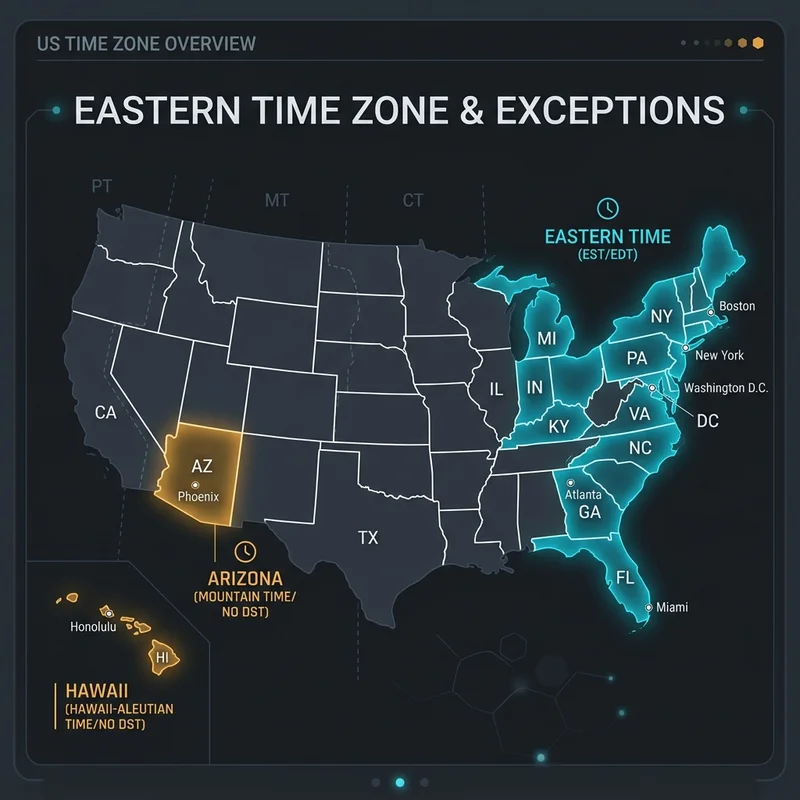
Figure 3: U.S. map highlighting the Eastern Time Zone boundaries and daylight saving exceptions.
The map illustrates that while the vast majority of the East Coast observes seasonal daylight saving transitions, specific territories and offshore regions choose to stay on permanent standard hours.
Daylight Saving Exceptions
Under federal law, U.S. states are not required to observe daylight saving time. If a state chooses to opt out, it must remain on permanent standard time throughout the entire year. Currently, there are two primary U.S. states that do not observe daylight saving time:
- Arizona: Most of Arizona does not observe daylight saving time, remaining on Mountain Standard Time (MST, UTC-7) year-round. However, the Navajo Nation located in northeastern Arizona does observe DST, shifting to MDT (UTC-6) in the summer.
- Hawaii: Due to its tropical latitude, Hawaii experience minimal variation in daylight hours between seasons and chooses to remain on Hawaii-Aleutian Standard Time (HST, UTC-10) year-round.
- U.S. Territories: Off-shore territories, including Puerto Rico, the U.S. Virgin Islands, Guam, American Samoa, and the Northern Mariana Islands, do not observe daylight saving time.
8. Real-Life Coordination Examples
To clarify how seasonal shifts impact daily coordination, review these practical examples:
London to New York Business Overlaps
Figure 6: Custom crossover diagram highlighting daily collaborative hours between London and New York.
- Scheduling a Webinar: A global company schedules a webinar for 10:00 AM Eastern Time in July. Because the East Coast is observing EDT (UTC-4) in July, the webinar will occur at 2:00 PM GMT. If the company scheduled the same webinar for January, it would occur under EST (UTC-5), which translates to 3:00 PM GMT.
- Financial Market Openings: The New York Stock Exchange opens at 9:30 AM Eastern Time. During winter standard time (EST), this translates to 2:30 PM GMT. During summer daylight saving (EDT), this translates to 1:30 PM GMT, shifting peak market liquidity windows for European traders.
- Database Systems and Server Logs: System administrators store server logs in UTC to avoid chronological issues. If a server recorded transactional entries in EST year-round, local database queries conducted during summer EDT hours would log a permanent 1-hour database skew.
9. Common Timezone Mistakes & Pitfalls
Timezone abbreviations are often misused in communications, leading to calendar conflicts and scheduling errors:
- Using EST in Summer: Writing "the meeting is at 2:00 PM EST" in July is a common mistake. Since July is in daylight saving time, the correct abbreviation is EDT. Using the wrong abbreviation implies a UTC-5 offset instead of UTC-4, causing confusion for international partners.
- Confusing Eastern Time with EST: Assuming that "EST" is the name of the timezone year-round is incorrect. The correct term for the zone is Eastern Time (ET). EST refers specifically to the winter offset.
- Calendar Double-Runs: During the autumn fall back shift in November, the hour between 1:00 AM and 2:00 AM occurs twice. If computer systems are not configured to use UTC, automated cron jobs scheduled during this period may execute twice.
10. EST vs EDT vs ET Explained
To clarify timezone terminology, let us compare the three terms:
| Term | Type | Offset | Typical Usage |
|---|---|---|---|
| Eastern Time (ET) | General Zone Name | Variable (UTC-5 or UTC-4) | Best for year-round calendars and event invites. |
| Eastern Standard Time (EST) | Winter Offset | Fixed (UTC-5) | Used specifically from November to March. |
| Eastern Daylight Time (EDT) | Summer Offset | Fixed (UTC-4) | Used specifically from March to November. |
Eastern Time Zone Seasonal Timeline
Figure 7: Custom timeline detailing seasonal transitions of the Eastern Time Zone.
11. Frequently Asked Questions (FAQ)
Review these comprehensive answers to resolve common questions about Eastern Standard Time and Eastern Daylight Time:
What is the difference between EST and EDT?
The difference between EST and EDT lies in daylight saving. EST stands for Eastern Standard Time (UTC-5), which is observed during the winter months. EDT stands for Eastern Daylight Time (UTC-4), which is observed during the summer months when clocks are moved forward by one hour.
When does EST change to EDT?
Eastern Standard Time (EST) changes to Eastern Daylight Time (EDT) on the second Sunday of March at 2:00 AM local time, when clocks 'spring forward' by one hour. The transition back to EST occurs on the first Sunday of November at 2:00 AM local time, when clocks 'fall back' by one hour.
What is the UTC offset for EST and EDT?
The UTC offset for Eastern Standard Time (EST) is UTC-5, meaning it is five hours behind Coordinated Universal Time. The UTC offset for Eastern Daylight Time (EDT) is UTC-4, meaning it is four hours behind Coordinated Universal Time.
Does Eastern Time mean EST or EDT?
Eastern Time (ET) is a general term that encompasses both Eastern Standard Time (EST) and Eastern Daylight Time (EDT). It refers to the timezone region itself, which automatically switches between EST and EDT depending on the time of year.
Does Canada use both EST and EDT?
Yes. Eastern provinces of Canada, including Ontario, Quebec, and Nunavut, observe both Eastern Standard Time (EST) and Eastern Daylight Time (EDT) on the same schedule as the United States.
Do all parts of Indiana observe daylight saving time?
Currently, yes. Most of Indiana observes Eastern Time (EST/EDT) and participates in daylight saving transitions. However, twelve counties in northwestern and southwestern Indiana observe Central Time (CST/CDT).
Are New York and Toronto in the same timezone?
Yes. Both New York City and Toronto are located in the Eastern Time zone. They observe Eastern Standard Time (EST, UTC-5) in the winter and Eastern Daylight Time (EDT, UTC-4) in the summer, keeping their clocks synchronized year-round.
What is the best way to invite remote workers to a meeting?
To prevent timezone confusion, use the general term 'Eastern Time' (ET) or specify the exact offset (UTC-5 or UTC-4). Calendar applications will automatically calculate local times for remote workers.
Does the stock market change hours during EDT?
No. The New York Stock Exchange (NYSE) and NASDAQ operate on a fixed local schedule from 9:30 AM to 4:00 PM Eastern Time. They adjust their clocks with the rest of the East Coast, meaning their absolute offset relative to GMT changes, but their local operating hours remain the same.
Is Jamaica on Eastern Standard Time year-round?
Yes. Jamaica is located in the Eastern Time zone coordinates and observes UTC-5 year-round. Because Jamaica does not participate in daylight saving time, it matches EST in the winter, but runs one hour behind EDT in the summer.
What happens to database backups during the fall back shift?
During the transition from EDT to EST in November, the 1:00 AM hour occurs twice. If database servers are not configured to use UTC, automated backup scripts might execute twice or log chronological errors.
Why is daylight saving time controversial?
Daylight saving time transitions are debated due to their impact on sleep schedules, agricultural routines, energy consumption, and health. Some advocacy groups propose adopting permanent standard time or permanent daylight saving time to eliminate clock changes.
Explore Time Zone Converters & Guides
Use our free, daylight-saving-aware tools to calculate time offsets and schedule meetings across global regions: