
What Is GMT? Greenwich Mean Time Explained

If you have ever tried to schedule an international meeting or book a flight across the world, you have likely encountered the acronym GMT. It is one of the most widely recognized abbreviations in global timekeeping, yet many people still wonder exactly what it represents. Greenwich Mean Time (GMT) is the foundational baseline for determining time zones across the planet. Serving as the anchor for the world’s clocks, understanding GMT is the key to mastering global time differences, whether you are trying to coordinate with colleagues abroad or simply using a GMT to EST converter to find the time in New York. This comprehensive guide will explain everything you need to know about Greenwich Mean Time, its fascinating history, how it works, and how to easily convert it to your local time.
In This Guide
- What Does GMT Stand For?
- A Quick History of Greenwich Mean Time
- How GMT Actually Works
- GMT vs. UTC: What’s the Real Difference?
- Related Time Terms You’ll Come Across
- GMT and Daylight Saving Time
- GMT Around the World
- Quick Reference Table
- Why GMT Still Matters Today
- Common Misconceptions About GMT
- How to Convert GMT to Your Local Time
- Frequently Asked Questions
- Final Thoughts
What Does GMT Stand For?
GMT stands for Greenwich Mean Time. Originally, it represented the mean solar time measured at the Royal Observatory in Greenwich, London. This specific location holds a special place in global geography and astronomy because it sits exactly on the Prime Meridian—the invisible line representing 0° longitude on Earth.
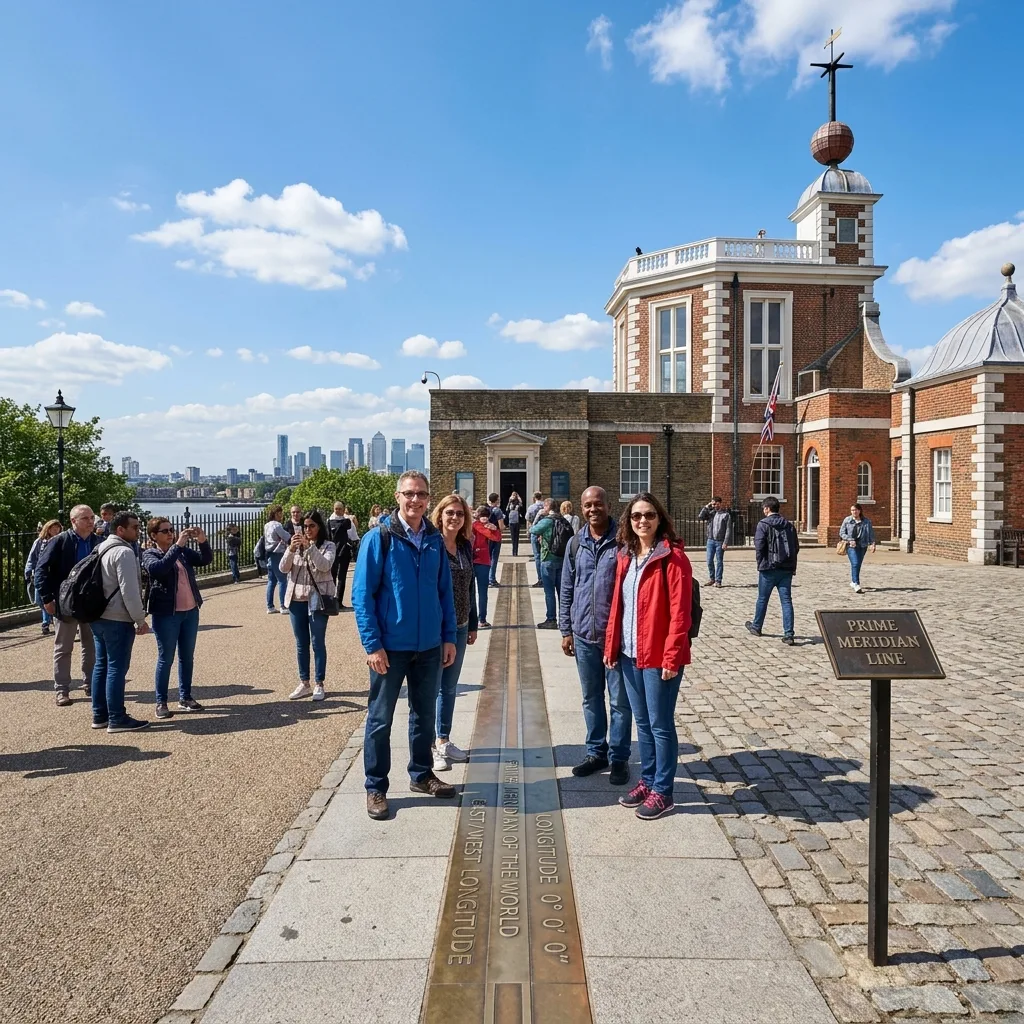
Because Greenwich sits at longitude zero, GMT serves as the baseline or starting point for the world’s time zone offsets. Every other time zone in the world is calculated as being either a certain number of hours ahead of GMT (to the east) or a certain number of hours behind GMT (to the west). Although scientific advancements have given us more precise ways to measure time today, GMT remains deeply embedded in our daily lives as the universal anchor for scheduling and navigation.
A Quick History of Greenwich Mean Time
The story of Greenwich Mean Time begins long before airplanes and the internet connected the globe. In 1675, King Charles II of England founded the Royal Observatory in Greenwich to assist naval navigation. At the time, mapping the stars and tracking time accurately was considered a matter of national security and maritime dominance. John Flamsteed was appointed as the very first Astronomer Royal, tasked with creating highly accurate star catalogs.
For centuries, the biggest challenge for sailors was calculating their longitude at sea. While latitude was easy to determine by the sun or stars, longitude required knowing the exact time at a reference point (like Greenwich) compared to the local time on the ship. By carrying accurate marine chronometers set to GMT, navigators could finally determine their east-west position across the oceans.
By the mid-19th century, the industrial revolution introduced a new problem: trains. Each town in Britain kept its own local solar time. When train schedules became more complex, these minute differences caused widespread confusion and even dangerous train collisions. To solve this, the Railway Clearing House standardized the British rail network to GMT in 1847, a shift commonly referred to as “Railway Time.”
The most pivotal moment for GMT came in 1884 at the International Meridian Conference in Washington, D.C. Delegates from 25 nations gathered to select a single Prime Meridian for the world. Greenwich was chosen overwhelmingly. Why did Greenwich win? Primarily, about 72% of the world’s shipping commerce already depended on sea charts that used Greenwich as the reference point. Furthermore, the United States had recently standardized its vast railway system based on the Greenwich meridian. The highly accurate Airy Transit Circle telescope at the observatory also provided unmatched precision. Although France abstained from the vote, preferring a Paris meridian, they eventually adopted GMT in 1911.
How GMT Actually Works
To understand GMT, it helps to know the difference between “apparent solar time” and “mean solar time.” Apparent solar time is what you see on a sundial. It tracks the exact moment the sun crosses the meridian (the highest point in the sky) in your specific location. However, due to the Earth’s elliptical orbit around the sun and its axial tilt, the sun does not cross the meridian at perfectly regular 24-hour intervals every single day.
Because of these variations, days measured by a sundial can be slightly longer or shorter depending on the time of year. This is where “mean” solar time comes into play. Mean solar time averages out these variations over the course of a year to produce a stable, uniform 24-hour day that our modern clocks can follow.
The difference between the fluctuating apparent solar time and the stable mean solar time is known as the “Equation of Time.” This difference can range from being about 14 minutes behind to 16 minutes ahead of clock time. Greenwich Mean Time is essentially the mean solar noon—the moment when the theoretical “mean sun” crosses the Greenwich meridian.
GMT vs. UTC: What’s the Real Difference?
While GMT and UTC are often used interchangeably in casual conversation, they are fundamentally different under the hood. Both represent the zero-offset baseline for global time (UTC+0 and GMT+0), meaning that if it is 12:00 PM GMT, it is exactly 12:00 PM UTC. However, the way they are measured sets them apart.

GMT is a time zone strictly based on astronomical observations, specifically the Earth’s rotation relative to the sun. Coordinated Universal Time (UTC), on the other hand, is a highly precise time standard based on a global network of atomic clocks (caesium-133). Because the Earth’s rotation is gradually slowing down and wobbling slightly, astronomical time (GMT) is inherently less stable than atomic time (UTC).
To ensure the two stay aligned, UTC was officially adopted in 1972, replacing GMT as the definitive scientific time standard. UTC relies on International Atomic Time (TAI), and occasional “leap seconds” are added to UTC so that it always remains within 0.9 seconds of the Earth’s actual solar time. For a deeper dive into this topic, read our full guide on the difference between GMT and UTC.
| Feature | GMT | UTC |
|---|---|---|
| Based On | Earth’s rotation (solar) | Atomic clocks (caesium-133) |
| Established | 1675 (Royal Observatory) | 1972 (international standard) |
| DST Changes | Never | Never |
| Primary Use | Civil timekeeping, UK/Africa | Science, aviation, computing |
| Accuracy | Drifts with Earth’s rotation | Stable to nanosecond precision |
| Adjustment | None | Leap seconds as needed |
Related Time Terms You’ll Come Across
When dealing with international time zones, you will frequently encounter several related acronyms. Understanding these will make global scheduling much easier:
- UTC (Coordinated Universal Time): The modern scientific standard by which all world clocks are regulated.
- BST (British Summer Time, UTC+1): The daylight saving time observed in the UK during the summer months when clocks move one hour ahead of GMT.
- EST/EDT (Eastern Standard Time): Eastern Standard Time is UTC-5, primarily used in North America. During the summer, this region observes Eastern Daylight Time (UTC-4).
- Zulu Time: The military and aviation phonetic term for UTC or GMT. The letter “Z” in the NATO phonetic alphabet represents the zero meridian time zone.
- UT1: An astronomical time standard based entirely on the Earth’s rotation angle in space, used mainly by astronomers.
GMT and Daylight Saving Time
A major source of confusion surrounding GMT is how it interacts with daylight saving time. The simple truth is: GMT itself NEVER changes for daylight saving time. GMT is a fixed geographical and astronomical reference point.
However, many countries that observe GMT during the winter months choose to switch to different time zone offsets during the summer. For example, in the United Kingdom, standard time in winter is GMT. But on the last Sunday in March, the UK shifts to British Summer Time (BST), which is UTC+1. The clocks revert to GMT on the last Sunday in October.

Other regions do exactly the same thing. Ireland shifts from GMT in winter to Irish Standard Time (IST, UTC+1) in summer. Portugal moves from Western European Time (WET, identical to GMT) to Western European Summer Time (WEST, UTC+1). GMT remains constant while the countries merely change the offset they choose to observe legally. For more details on these seasonal shifts, check out how daylight saving time explained affects global scheduling.
GMT Around the World
GMT serves as the cornerstone for calculating time everywhere on Earth. Here is how various major regions relate to Greenwich Mean Time.

GMT in the United States
The United States does not observe GMT at any time of the year. Instead, American time zones are defined by their negative offset from the Prime Meridian. Eastern Time is generally GMT-5 during standard time (EST) and GMT-4 during daylight saving (EDT). Moving westward, Central time is GMT-6/GMT-5, Mountain time is GMT-7/GMT-6, and Pacific time is GMT-8/GMT-7. You can read more in our guide to USA time zones.
GMT in the United Kingdom
The United Kingdom is the historical home of GMT, and it legally serves as the country’s winter time zone from late October to late March. During the warmer months, the UK shifts to BST to maximize evening daylight. Learn more in our United Kingdom time zone overview.
GMT in Canada
Canada shares many longitudinal similarities with the US, and its time zones are structured similarly based on negative offsets from GMT. Key zones include Newfoundland Standard Time (GMT-3:30), Atlantic Standard Time (GMT-4), Eastern Standard Time (GMT-5), Central Standard Time (GMT-6), Mountain Standard Time (GMT-7), and Pacific Standard Time (GMT-8). Explore the specifics in our Canada time zones guide.
GMT in Europe
While the UK, Ireland, Portugal, and Iceland use GMT (or WET) in the winter, the rest of Western Europe largely observes Central European Time (CET, GMT+1). Interestingly, countries like France, Spain, Belgium, and the Netherlands geographically fall perfectly within GMT’s longitudinal borders. However, they adopted CET (GMT+1) during World War II and never switched back, leading to a permanent one-hour misalignment with their geographical solar time. Moving eastward, Europe utilizes Eastern European Time (EET, GMT+2).
GMT in Australia
Because Australia sits far to the east of Greenwich, its time zones feature large positive offsets. The main zones are Australian Eastern Standard Time (AEST, GMT+10), Australian Central Standard Time (ACST, GMT+9:30), and Australian Western Standard Time (AWST, GMT+8). Several states observe daylight saving, pushing offsets up by an additional hour. Discover more in our Australia time zones guide.
Quick Reference Table
When you need to quickly look up how major global cities compare to GMT, use this handy reference table highlighting both standard time and daylight saving time differences.
| City | Standard GMT Offset | Daylight Saving Offset |
|---|---|---|
| London, UK | GMT+0 | GMT+1 (BST) |
| New York, USA | GMT-5 (EST) | GMT-4 (EDT) |
| Chicago, USA | GMT-6 (CST) | GMT-5 (CDT) |
| Denver, USA | GMT-7 (MST) | GMT-6 (MDT) |
| Los Angeles, USA | GMT-8 (PST) | GMT-7 (PDT) |
| Toronto, Canada | GMT-5 (EST) | GMT-4 (EDT) |
| Paris, France | GMT+1 (CET) | GMT+2 (CEST) |
| Berlin, Germany | GMT+1 (CET) | GMT+2 (CEST) |
| Dubai, UAE | GMT+4 (GST) | No DST |
| Mumbai, India | GMT+5:30 (IST) | No DST |
| Tokyo, Japan | GMT+9 (JST) | No DST |
| Sydney, Australia | GMT+10 (AEST) | GMT+11 (AEDT) |
| Auckland, NZ | GMT+12 (NZST) | GMT+13 (NZDT) |
| Reykjavik, Iceland | GMT+0 | No DST |
| Accra, Ghana | GMT+0 | No DST |
Why GMT Still Matters Today
Even though UTC has technically replaced GMT as the precise international standard for science and technology, GMT is far from obsolete. Its historical significance and deep integration into various global sectors mean it remains highly relevant today.
In maritime navigation, traditional marine chronometers and ship logs often still reference GMT. In aviation, all flight plans and air traffic control coordination rely heavily on Zulu time, which is directly tied to the zero meridian. In the UK, the famous BBC Greenwich Time Signal—often referred to as “the pips”—has broadcast the precise time to millions since 1924.
Military operations within NATO continue to coordinate deployments using Zulu time to prevent confusion across vast geographical distances. Meteorological agencies and global weather services synchronize their atmospheric observations to UTC/GMT hours to ensure accurate forecasting. Finally, most software engineering standards, server architectures, and databases log timestamps strictly using the GMT/UTC baseline to avoid local time zone errors.
Common Misconceptions About GMT
Because of its long history and complex relationship with UTC and daylight saving, several myths about GMT continue to persist. Let’s clear up a few of the most common misconceptions:
- ❌ “GMT and UTC are identical” → While they share the exact same hours on a clock, they differ in how they are measured. GMT is solar-based, while UTC relies on atomic clocks.
- ❌ “London is always on GMT” → London only observes GMT during the winter months. During the summer, the city shifts to British Summer Time (BST).
- ❌ “GMT changes for daylight saving” → GMT is a fixed baseline that never shifts. Individual countries simply choose to move away from the GMT standard during the summer.
- ❌ “GMT is obsolete” → While scientists prefer UTC, GMT is still legally observed by multiple countries and used extensively in broadcast, historical, and maritime contexts.
- ❌ “GMT+0 means no time difference anywhere” → GMT+0 only indicates the local time for countries directly on the Prime Meridian (like Iceland and Ghana). Everywhere else in the world possesses a positive or negative offset.
How to Convert GMT to Your Local Time
Converting Greenwich Mean Time to your local time zone is incredibly straightforward once you know your region’s base offset. The process requires only a little simple math.
Step 1 is to find out your location’s UTC/GMT offset (you can refer to our quick reference table above). Step 2 is to simply add the offset if you live east of Greenwich, or subtract the offset if you live west of Greenwich.

For example, if you know an event is happening at 3:00 PM GMT and you are located in New York during standard time (GMT-5), you would subtract 5 hours. That means the event occurs at 10:00 AM EST for you.
If you are in Tokyo (GMT+9) and the time is 3:00 PM GMT, you add 9 hours, resulting in 12:00 AM JST (midnight, tipping into the next day). Similarly, if you are in Mumbai (GMT+5:30), 3:00 PM GMT converts to 8:30 PM IST locally.
Always remember to double-check whether your region is currently observing standard time or daylight saving time, as this will change your math by exactly one hour. Need to convert GMT to Eastern Time? Use our GMT to EST converter to quickly check the exact time difference.
Frequently Asked Questions
What does GMT stand for?
GMT stands for Greenwich Mean Time. It is the mean solar time measured at the Royal Observatory in Greenwich, London, located on the Prime Meridian at 0° longitude.
Is GMT the same as UTC?
GMT and UTC share the same clock time (both represent the zero-offset baseline), but they are technically different. GMT is an astronomical time zone based on Earth’s rotation, while UTC is a scientific standard based on atomic clocks. For everyday purposes, they are interchangeable.
Does GMT change for daylight saving time?
No. GMT is a fixed time zone offset (UTC+0) that never changes for daylight saving time. Countries observing GMT in winter, like the UK, switch to other offsets in summer — for example, British Summer Time (BST, UTC+1).
What is the difference between GMT and EST?
Eastern Standard Time (EST) is GMT-5, meaning it is five hours behind Greenwich Mean Time. During daylight saving, the US Eastern time zone shifts to EDT (GMT-4).
Which countries use GMT year-round?
Iceland, several West African nations including Ghana, Senegal, Mali, Mauritania, Gambia, Guinea, Sierra Leone, Liberia, and Côte d’Ivoire observe GMT (UTC+0) year-round without daylight saving adjustments.
Why was Greenwich chosen for the Prime Meridian?
Greenwich was selected at the 1884 International Meridian Conference because approximately 72% of the world’s shipping charts already used it as their reference point, and the United States had standardized its railway system based on the Greenwich meridian.
Is London always on GMT?
No. London observes GMT (UTC+0) from late October to late March. During summer, the UK shifts to British Summer Time (BST, UTC+1).
How do I convert GMT to my local time?
Find your region’s UTC offset and add or subtract it from GMT. For example, if you are in New York (EST, UTC-5), subtract 5 hours from GMT. If it is 3:00 PM GMT, it is 10:00 AM EST.
What is Zulu time?
Zulu time is the military and aviation term for UTC/GMT. The letter Z in the NATO phonetic alphabet is pronounced ‘Zulu,’ and it designates the zero-meridian time zone.
Why do scientists prefer UTC over GMT?
Scientists prefer UTC because it is based on highly stable atomic clocks rather than Earth’s slightly irregular rotation. UTC provides the precision required for telecommunications, navigation systems, and scientific research.
Final Thoughts
Greenwich Mean Time has played an indispensable role in connecting our modern world. From its humble origins in 1675 at the Royal Observatory to coordinate maritime voyages, it has evolved into the bedrock of global scheduling, railway timetables, and modern computing. Understanding what GMT means empowers you to manage cross-border communications, travel plans, and software data without second-guessing your calendar.
While Coordinated Universal Time (UTC) has officially taken the reins for scientific and highly precise atomic timekeeping, GMT remains the friendly, familiar face of everyday global time measurement. The legacy of the Prime Meridian ensures that Greenwich will forever remain the center of the world’s clock.
If you are eager to expand your understanding of time zones, explore our resources to decode acronyms like EST vs EDT or dive into our comprehensive time zone guide for complete clarity on worldwide time differences.
Related Time Zone Guides
Sources & References
- The Prime Meridian at Greenwich — Royal Museums Greenwich
- Coordinated Universal Time (UTC) — National Institute of Standards and Technology
- Time Zone and Daylight Saving Time Data — IANA Time Zone Database
- International Meridian Conference Proceedings — Project Gutenberg