
London Time: Complete Guide to Time in London (2026)
Welcome to the definitive guide to London Time. As the birthplace of standard time zones and a key global hub for finance, culture, and shipping, London sets the reference standard for clocks and networks around the world.
Quick Time Summary for London
Europe/London Key Concept Check
During the winter, London is on Greenwich Mean Time (GMT) at UTC+0. In the summer, the city shifts forward by 1 hour to British Summer Time (BST) at UTC+1.
1. Why London Time Matters Globally
London occupies a unique place in the history of horology. Positioned geographically at 0 degrees longitude, it serves as the baseline for Coordinated Universal Time (UTC), which coordinates every computerized clock, flight plan, and banking transaction across the globe.
2. Greenwich Mean Time (GMT) Explained
Originally calculated as the solar time at the Royal Observatory in Greenwich, Greenwich Mean Time (GMT) was adopted as the UK's standard time in 1847. By 1884, it was recognized globally as the prime reference offset (UTC+0).
GMT is observed strictly during the winter months (late October to late March). Unlike daylight time, standard GMT does not adjust clocks, representing a constant astronomical base.
3. British Summer Time (BST) Explained
In 1916, the UK Parliament passed the Summer Time Act, introducing British Summer Time (BST) at UTC+1. Designed to maximize daylight during working hours and save energy during the First World War, the system shifted sunset times later into the evening.
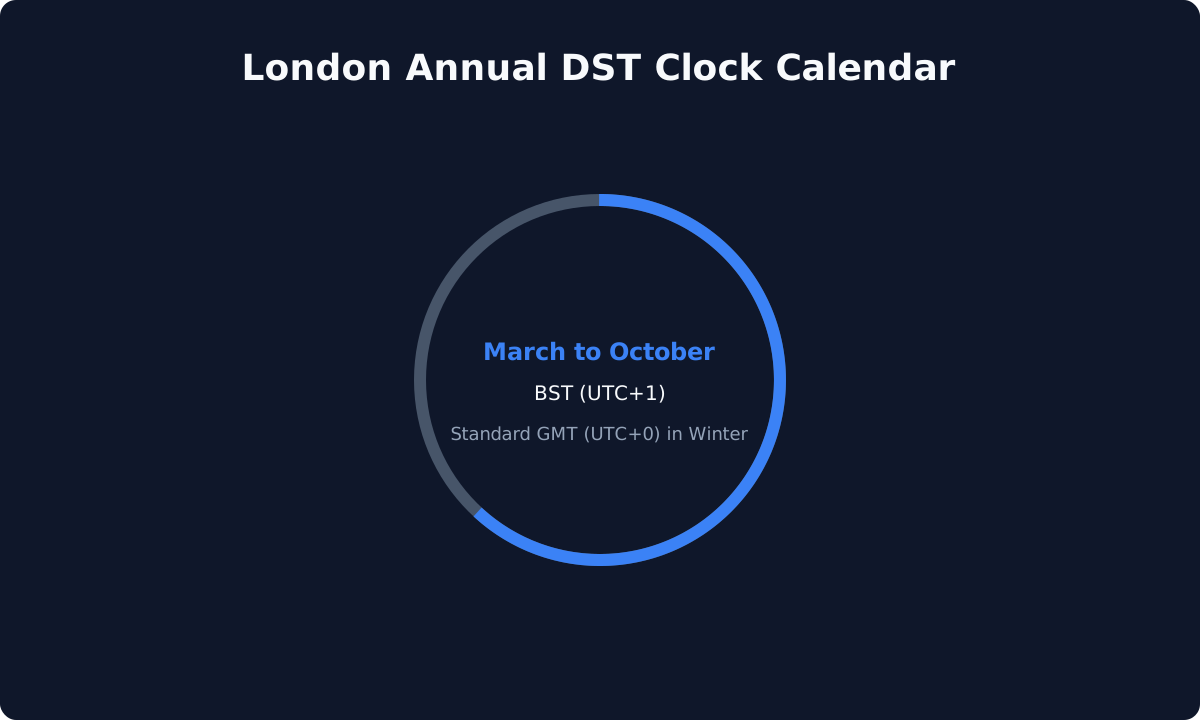
BST is observed from late March to late October. During this period, the UK shifts one hour ahead of GMT.
4. GMT vs. BST Timeline
Here is how London transitions between winter and summer offsets:
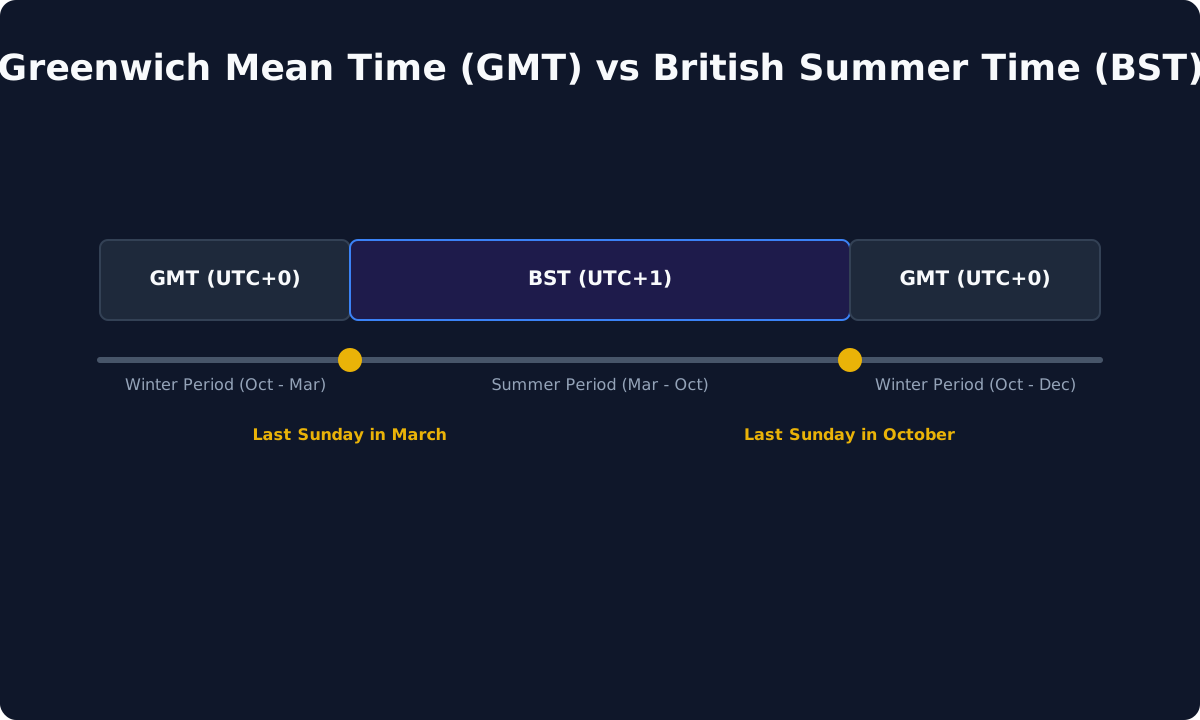
| Season | Name | Abbreviation | Offset | Duration |
|---|---|---|---|---|
| Winter | Greenwich Mean Time | GMT | UTC+0 | Last Sunday of October to Last Sunday of March |
| Summer | British Summer Time | BST | UTC+1 | Last Sunday of March to Last Sunday of October |
5. The Prime Meridian & Royal Observatory
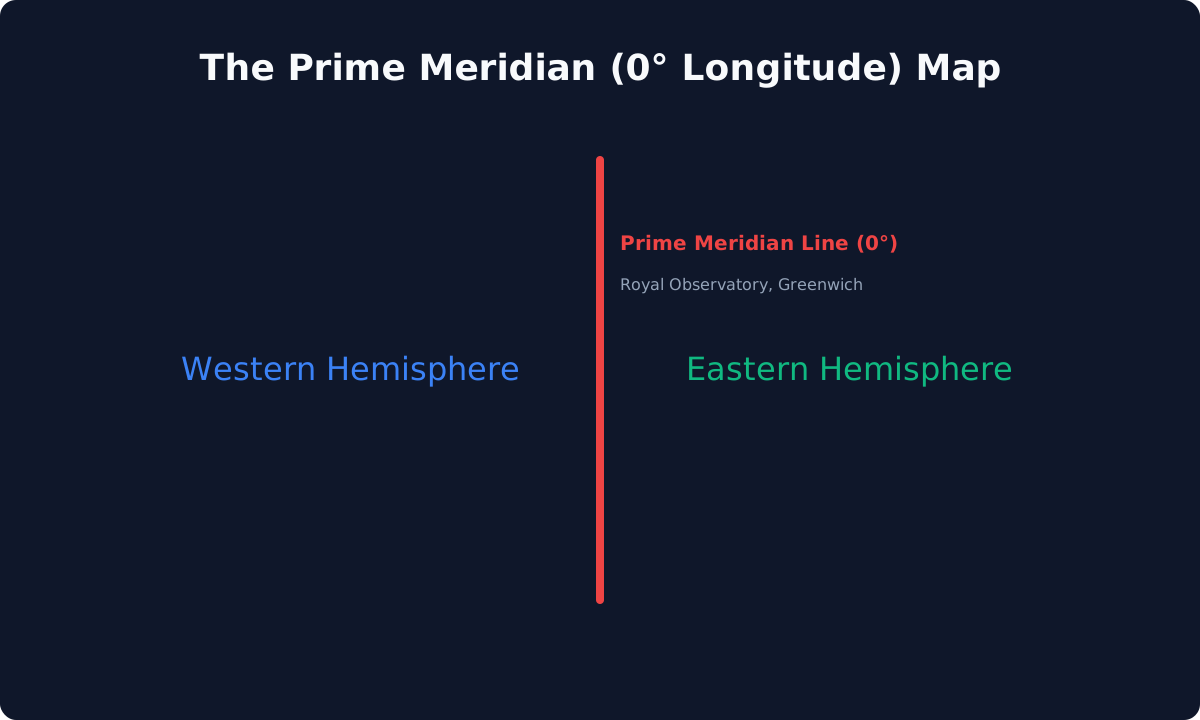
The Royal Observatory, Greenwich, founded in 1675 by King Charles II, is the historic home of the Prime Meridian. Positioned at 0° longitude, the meridian line was established by international consensus in 1884 to standardize global map navigation and timezone offsets.
Did You Know?
The Prime Meridian line at Greenwich is marked by a green laser beam projected across the London night sky from the Observatory, aligning precisely with the 0° longitude coordinate.
6. London Financial Markets & Business Hours
London's position between North American and Asian timezones makes it a vital commercial corridor.
The London Stock Exchange (LSE) operates on local time:
- Core Session: 8:00 a.m. to 4:30 p.m. local time, Monday through Friday.

7. International Meeting Schedules
Coordinating meetings between London and global hubs requires careful scheduling to stay within standard working hours:
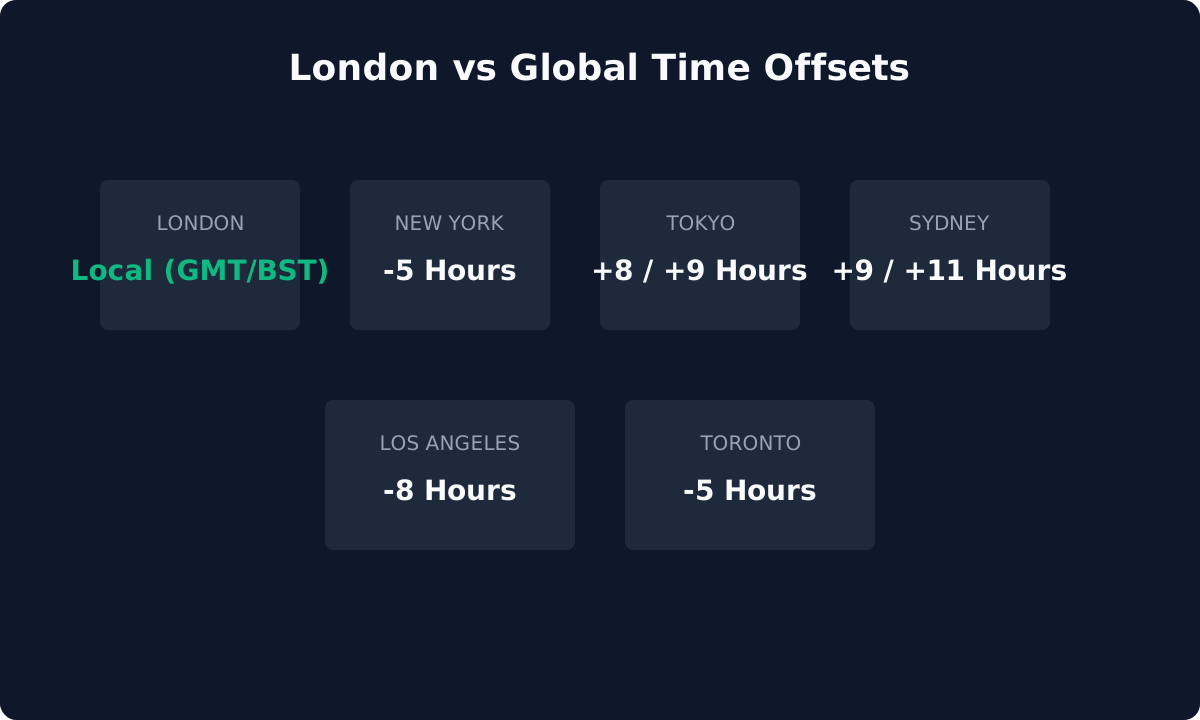
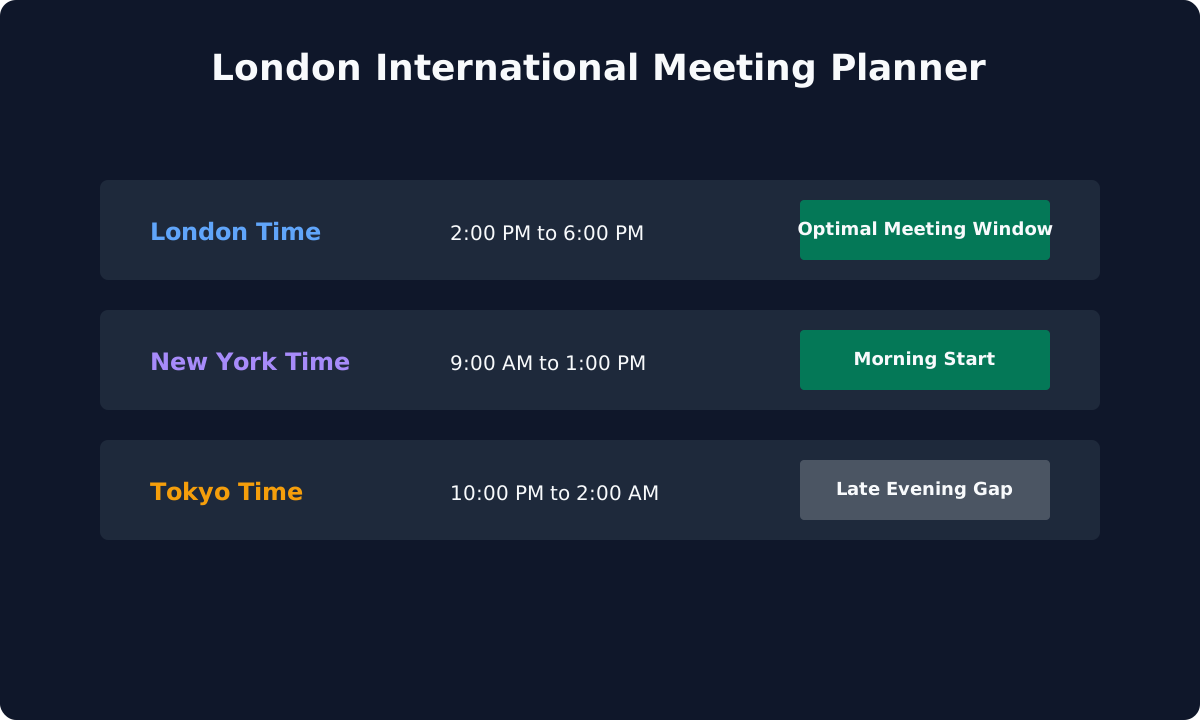
- London to New York: London is 5 hours ahead. Best scheduling window is 2:00 p.m. to 5:00 p.m. London Time (9:00 a.m. to 12:00 p.m. New York Time).
- London to Tokyo: Tokyo is 8 to 9 hours ahead. Schedule calls between 8:00 a.m. and 9:00 a.m. London Time (4:00 p.m. to 6:00 p.m. Tokyo Time).
8. Travel Planning & Connections
Traveling through major London hubs (Heathrow LHR, Gatwick LGW) requires careful clock adjustments, especially during seasonal DST changes.
Biannual Transition Warning
Check the UK transition dates carefully. If you fly in late October, the UK switches back to GMT on the last Sunday, potentially changing the flight offset compared to non-EU destinations.
9. Programming & UTC Best Practices
When building systems that log London events, utilize standard UTC offsets rather than localized runtime timezone settings to prevent scheduling overlap issues during transitions.
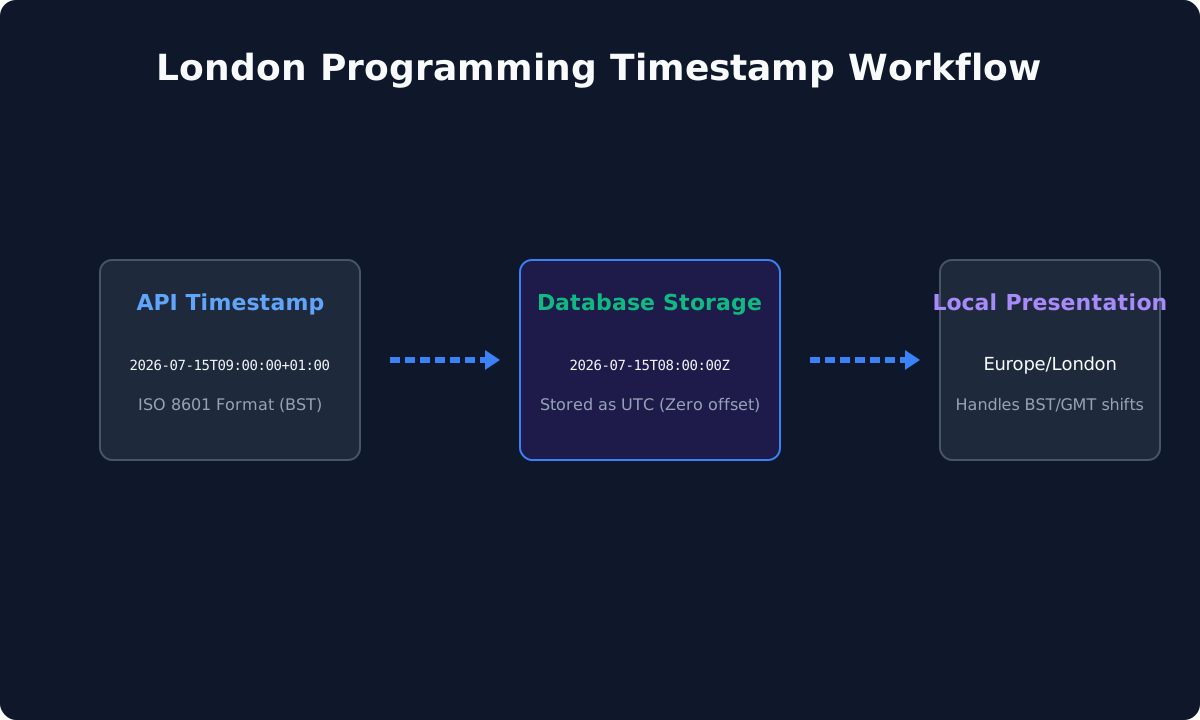
Always represent London events using ISO 8601 formatting and reference the IANA location name Europe/London:
- Standard (Winter/GMT):
2026-12-15T10:00:00Zor2026-12-15T10:00:00+00:00 - Summer (Daylight/BST):
2026-06-15T10:00:00+01:00
10. Common Time Zone Mistakes to Avoid
- Writing GMT during the Summer: Writing "GMT" in June is incorrect because London is on BST (UTC+1). This can cause software logs to record events 1 hour late.
- Assuming London changes DST with the US: London transitions on the last Sunday of March and October, while the US transitions on the second Sunday of March and first Sunday of November, creating a 2-3 week variance.
11. Frequently Asked Questions
What time zone does London use?
London alternates between Greenwich Mean Time (GMT) in winter and British Summer Time (BST) in summer.
Is London currently on GMT or BST?
London observes British Summer Time (BST, UTC+1) from the last Sunday in March until the last Sunday in October. During the winter months, from the last Sunday in October until the last Sunday in March, it observes Greenwich Mean Time (GMT, UTC+0).
What is London's UTC offset?
During standard time (winter), London is at UTC+0. During summer daylight saving time, London is at UTC+1.
When does Daylight Saving Time begin and end in London?
Daylight Saving Time (known as BST) begins on the last Sunday of March at 1:00 a.m. UTC (clocks jump forward to 2:00 a.m. BST). It ends on the last Sunday of October at 2:00 a.m. BST (clocks return back to 1:00 a.m. GMT).
Why does the UK use British Summer Time?
British Summer Time was introduced in 1916 following campaign efforts by William Willett, intending to save fuel and increase evening daylight hours during the First World War.
What is the time difference between London and New York?
During most of the year, London is 5 hours ahead of New York. However, a brief 4-hour difference occurs in March and October because North America and Europe transition to and from daylight saving on different dates.
What is the time difference between London and Toronto?
London is 5 hours ahead of Toronto under normal circumstances. This gap shifts to 4 hours for a few weeks in March and October due to standard DST transition variations.
What is the time difference between London and Los Angeles?
London is 8 hours ahead of Los Angeles. In March and October, this offset shifts briefly to 7 hours due to DST transition schedule discrepancies.
What is the time difference between London and Tokyo?
During the winter, Tokyo (JST, UTC+9) is 9 hours ahead of London (GMT, UTC+0). During the summer, Tokyo is 8 hours ahead of London (BST, UTC+1) because Japan does not observe DST.
What is the Prime Meridian and where is it located?
The Prime Meridian is the line of 0° longitude that divides the Earth into the Eastern and Western Hemispheres. It is located at the Royal Observatory in Greenwich, London.
What is the difference between GMT and UTC?
GMT is a standard timezone used in Europe and Africa, whereas UTC (Coordinated Universal Time) is a high-precision atomic time standard used globally to synchronize computers and networks. GMT and UTC share the exact same offset value (UTC+0).
What are the hours of the London Stock Exchange (LSE)?
The LSE is open for core trading from 8:00 a.m. to 4:30 p.m. local London time, Monday through Friday.
What is the IANA time zone identifier for London?
The IANA Time Zone Database identifier for London is Europe/London.
Does all of the UK use the same time zone?
Yes. The entire United Kingdom (England, Scotland, Wales, and Northern Ireland) observes Greenwich Mean Time (GMT) in winter and British Summer Time (BST) in summer.
How does BST transition affect travel schedules at Heathrow Airport (LHR)?
Timetables are published in local London times. When the transition to BST or GMT occurs, flight schedules are adjusted relative to international destinations to maintain synchronization.
How do I schedule a meeting between London and Tokyo?
Target the morning in London (8:00 a.m. to 9:00 a.m. local time), which corresponds to the late afternoon or early evening in Tokyo (4:00 p.m. to 6:00 p.m. JST).
Does London use Military Time?
The 24-hour clock (military time) is the standard format for UK railway timetables, bus schedules, flight boards, and digital logs to prevent confusion between AM and PM.
What is British Standard Time?
British Standard Time refers to standard GMT (UTC+0). Historically, the UK experimented with permanent BST (UTC+1) year-round between 1968 and 1971, but returned to standard winter transitions.
How should database developers store London timestamps?
All database timestamps should be stored in UTC. Local conversions to London time should be handled in the client application layer using the Europe/London timezone database library.
Is London Time the same as Western European Time?
Yes. The Western European Time (WET) zone shares the same offset as GMT (UTC+0), and Western European Summer Time (WEST) shares the same offset as BST (UTC+1).
Explore Time Zone Converters & Guides
Use our free, daylight-saving-aware converters and timezone guides to calculate offsets and plan meetings: