Tokyo Time: Complete Guide to Time in Tokyo, Japan (2026)
Welcome to the definitive guide to Tokyo Time. As one of the world's primary financial, technological, and gaming capitals, Tokyo operates on a timezone that sets the rhythm for business operations across the Asia-Pacific region.
Quick Time Summary for Tokyo
Asia/Tokyo Key Fact Check
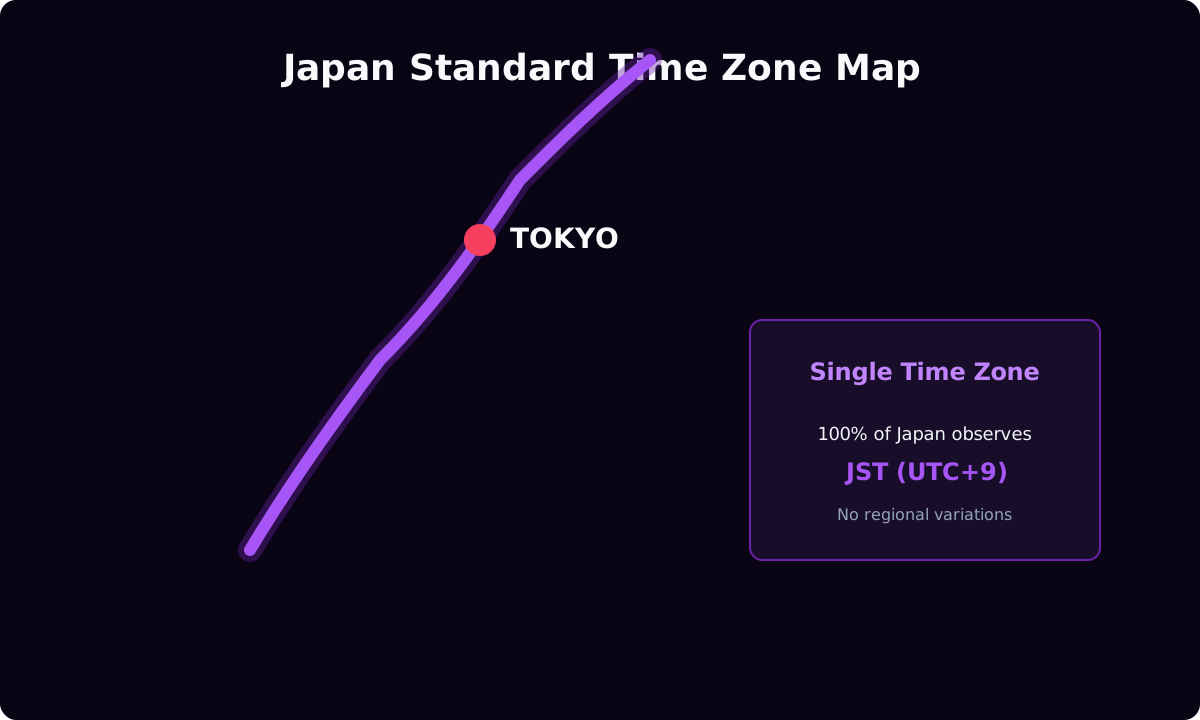
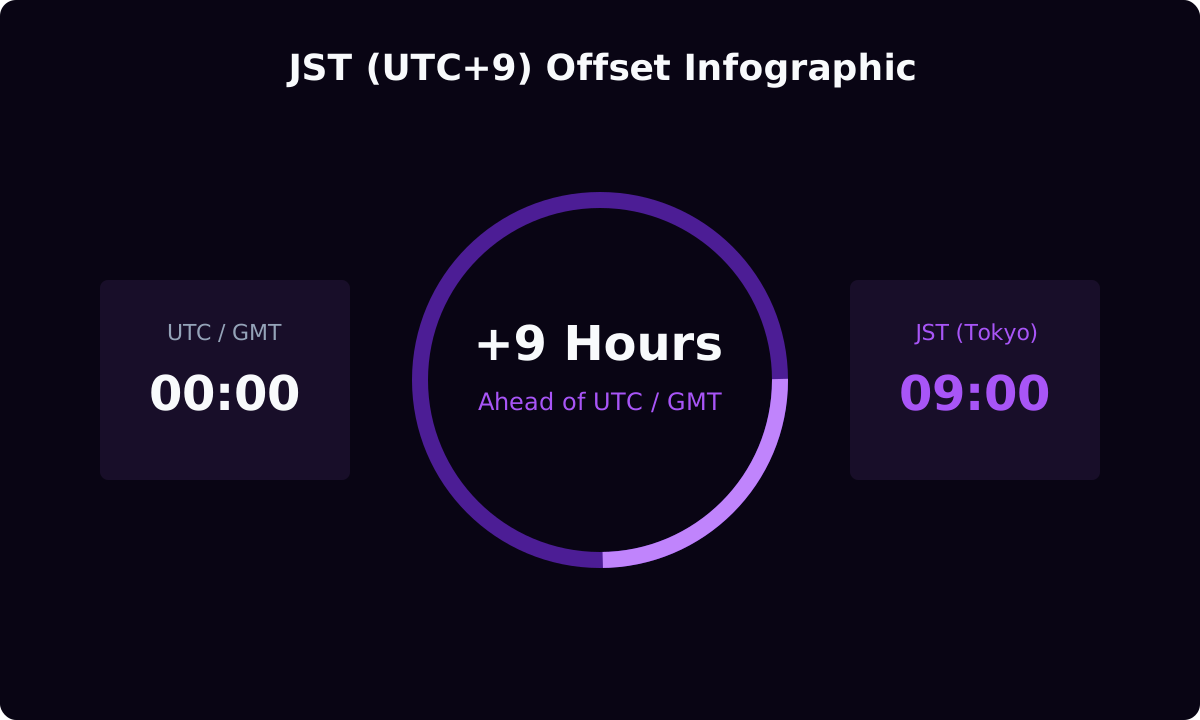
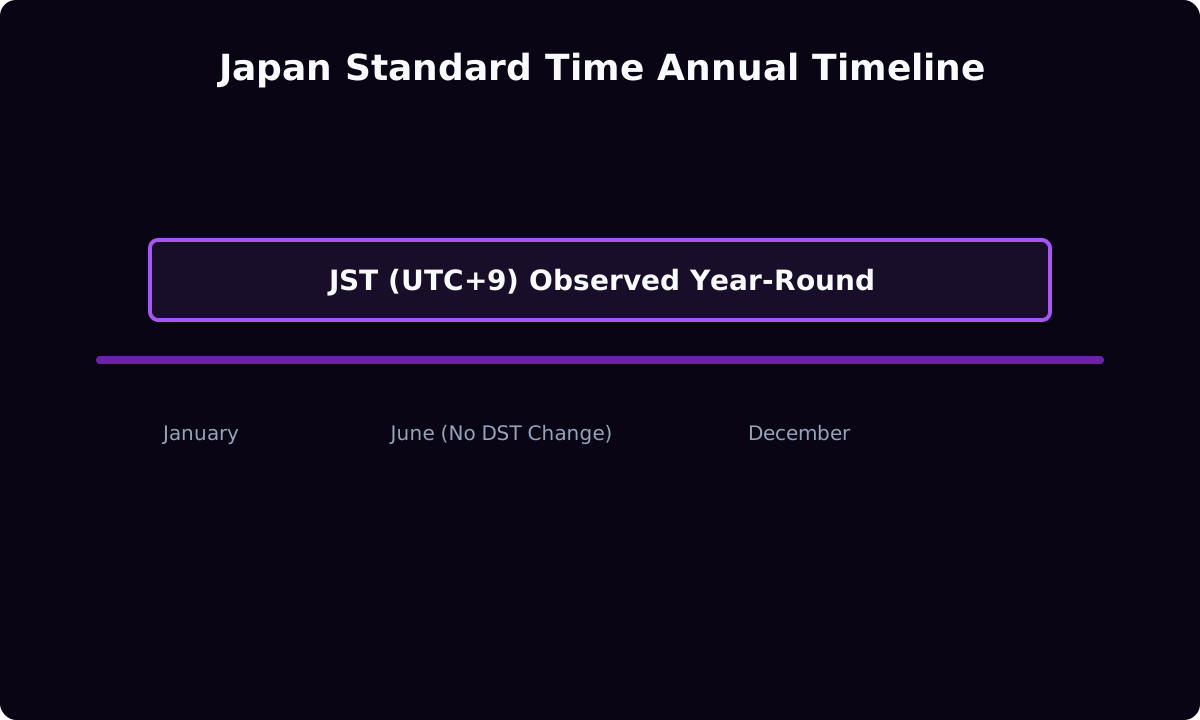
Japan operates entirely under one time zone: Japan Standard Time (JST), which is exactly 9 hours ahead of Coordinated Universal Time (UTC+9). Japan does not observe Daylight Saving Time.
1. Understanding Tokyo Time
As the center of the world's most populous metropolitan area, Tokyo coordinates a vast network of international shipping, financial trading, high-tech manufacturing, and digital entertainment.
Unlike North America and Europe, which alternate between standard and daylight saving times, Japan keeps its clocks fixed year-round. This consistency simplifies domestic schedules but introduces seasonal offset shifts when coordinating with countries that observe DST.
2. What Is Japan Standard Time (JST)?
Japan Standard Time (JST) is the standard time offset used throughout Japan. In Japanese, it is referred to as Nihon Hyojunji (日本標準時).
The offset of UTC+9 was legally established in 1886 under an imperial decree issued by Emperor Meiji. The standard meridian for Japan is set to 135° East Longitude, which passes exactly through Akashi City in Hyogo Prefecture.
3. Why Japan Uses One Time Zone
Japan is geographically situated as a long chain of islands extending primarily from north to south, spanning only about 20 degrees of longitude from its westernmost to easternmost inhabited points.
Because this longitudinal spread translates to less than 1.5 hours of solar difference, dividing the country into multiple zones would create administrative confusion without providing any significant benefit. Having a single timezone ensures that transit networks (like the Shinkansen bullet trains), media broadcasts, and governmental departments are perfectly synchronized from Hokkaido to Okinawa.
4. Does Japan Observe Daylight Saving Time?
Japan does not observe Daylight Saving Time (DST). The country's clocks remain set to UTC+9 year-round.
Historical Context
Following the Second World War, the Allied occupation authorities introduced Daylight Saving Time to Japan in 1948 to reduce power consumption. However, the change was unpopular due to agricultural disruptions and longer working hours. The system was officially abolished in 1951, and Japan has rejected proposals to reintroduce DST ever since.
Did You Know?
Because Japan does not use DST, the time difference between Tokyo and cities that do observe DST (like London, New York, and Sydney) shifts by exactly one hour twice a year.
5. Tokyo Business & Industry Scheduling
Tokyo is home to major international corporations, financial markets, and creative industries that operate on precise schedules:
Tokyo Stock Exchange (TSE) Hours
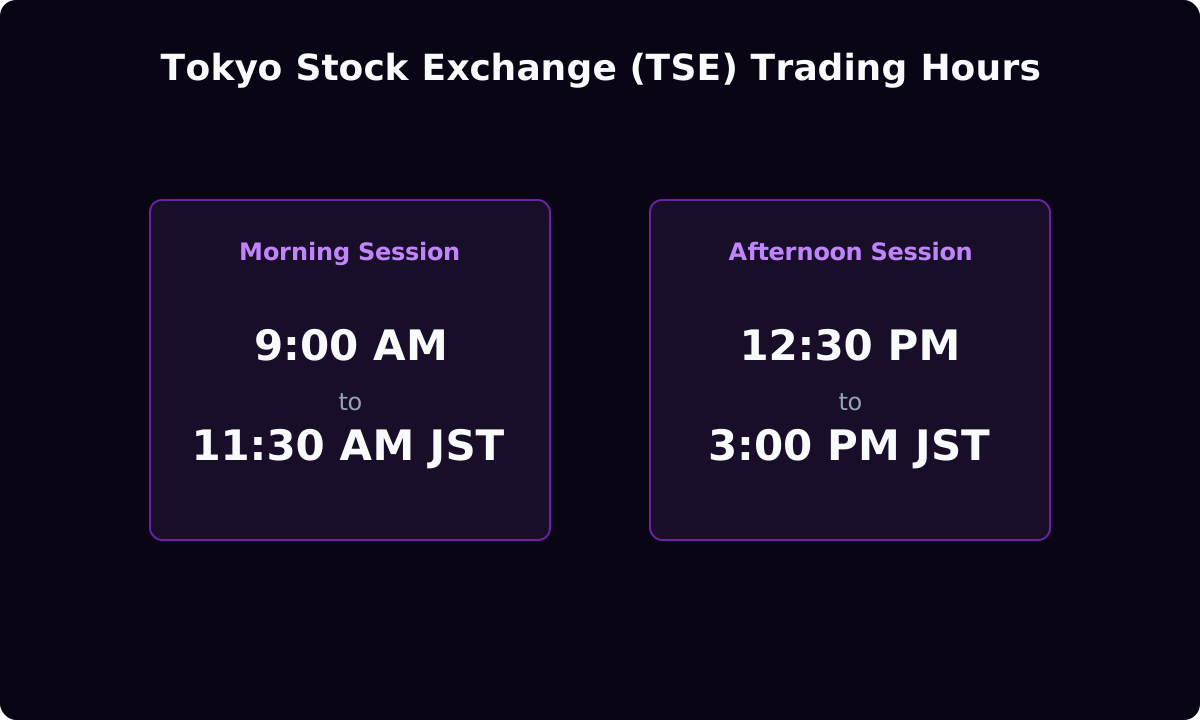
The TSE is the primary stock market in Japan. Its trading hours are split into two distinct sessions:
- Morning Session: 9:00 a.m. to 11:30 a.m. JST.
- Lunch Break: 11:30 a.m. to 12:30 p.m. JST (trading stops).
- Afternoon Session: 12:30 p.m. to 3:00 p.m. JST.
Technology & Gaming Industries
Tokyo is a globally dominant center for video game development and consumer electronics. Companies like Sony, Nintendo (headquartered in nearby Kyoto), and Bandai Namco release software patches, game launches, and eShop updates in local JST, requiring international partners to coordinate closely to achieve synchronized global rollouts.
6. Tokyo vs. The World (Time Comparison)
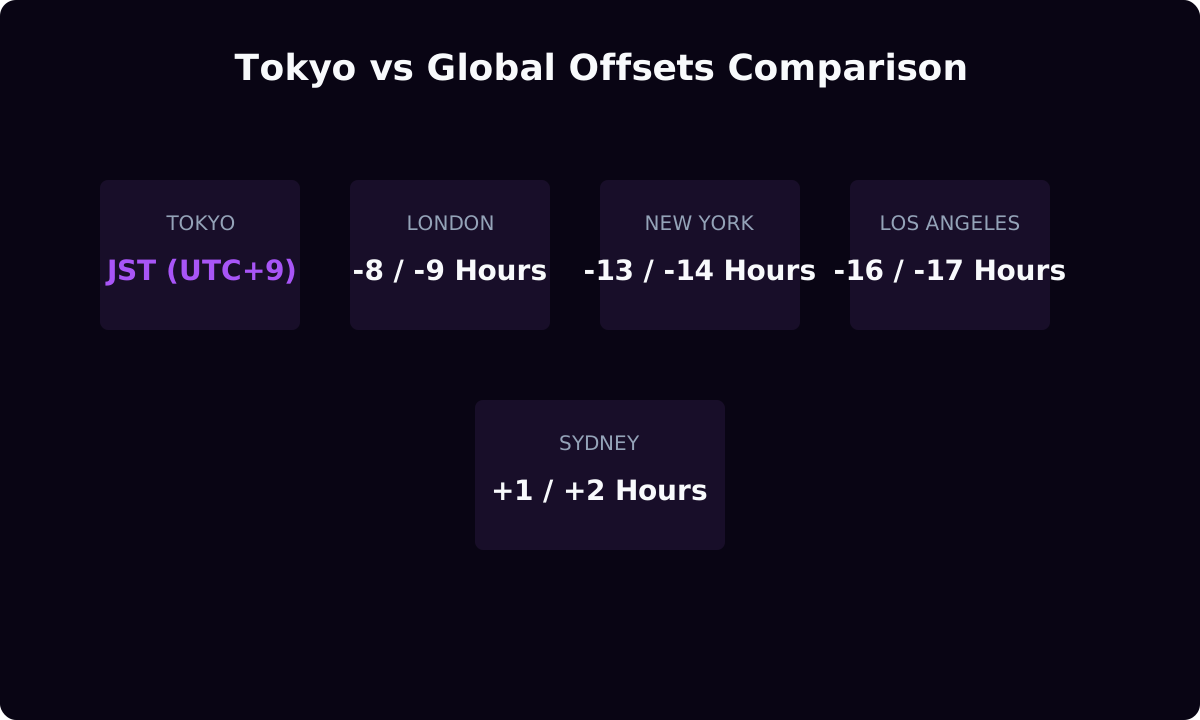
Because Japan does not adjust its clocks for DST, the offset difference between Tokyo and other financial capitals changes biannually:
| City | Northern Summer Difference (vs. Tokyo) | Northern Winter Difference (vs. Tokyo) |
|---|---|---|
| London | London is 8 hours behind (BST) | London is 9 hours behind (GMT) |
| New York | New York is 13 hours behind (EDT) | New York is 14 hours behind (EST) |
| Los Angeles | Los Angeles is 16 hours behind (PDT) | Los Angeles is 17 hours behind (PST) |
| Sydney | Sydney is 1 hour ahead (AEST) | Sydney is 2 hours ahead (AEDT) |
7. Travel Planning & Jet Lag
Traveling into Tokyo (through Narita NRT or Haneda HND airports) involves navigating substantial timezone shifts.
Jet Lag Alert
Eastbound travel to Japan from Europe or North America forces your body clock to shift forward, which is generally harder to adjust to than westbound flights. Plan for a 3-4 day adaptation period.
8. Programming, Databases & Cloud Infrastructure
Managing Japan Standard Time programmatically is simplified because there are no seasonal DST transitions. However, developers must still store timestamps correctly to facilitate global queries:
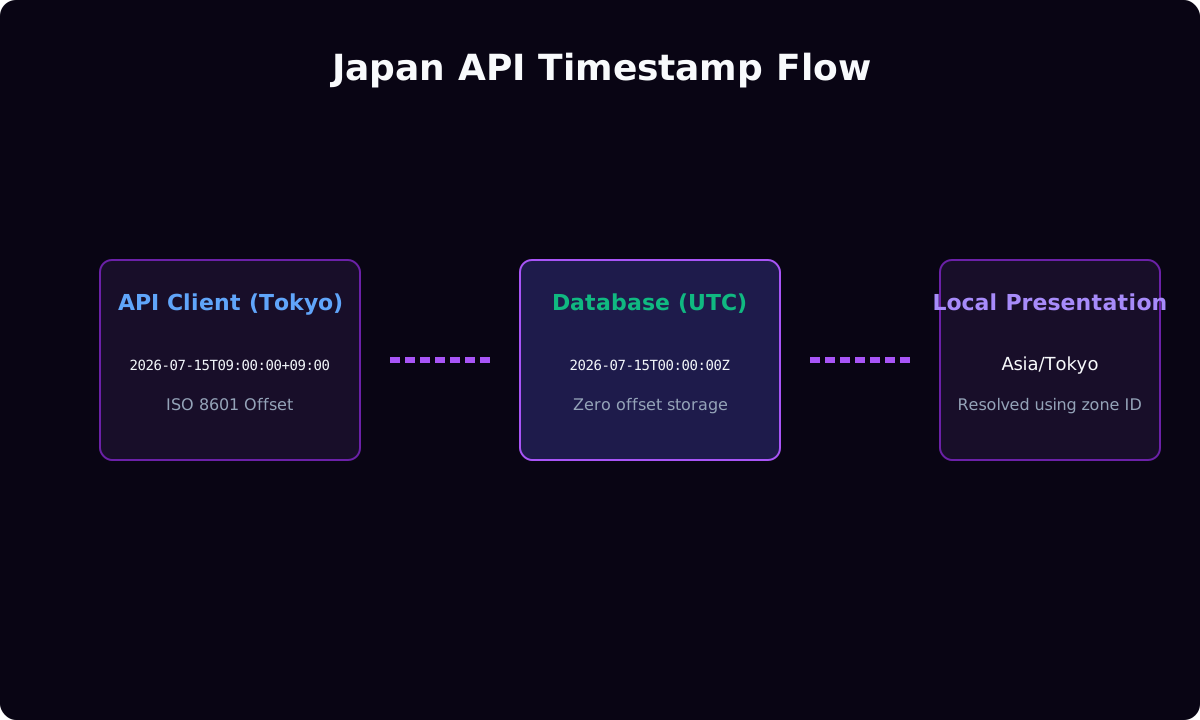
Always utilize the IANA location identifier Asia/Tokyo inside your server configuration to translate timestamps:
- Standard ISO 8601 representation:
2026-07-16T15:00:00+09:00
9. Common Time Zone Mistakes to Avoid
- Assuming Japan uses seasonal daylight shifts: Trying to add DST rules to Japanese databases will cause application scheduling bugs.
- Misinterpreting JST offsets: JST is always UTC+9. Do not confuse it with China Standard Time (CST, UTC+8) or Western Australia AWST (UTC+8).
10. Frequently Asked Questions
What time zone does Tokyo use?
Tokyo operates in the Japan Standard Time (JST) zone, representing a Coordinated Universal Time offset of UTC+9.
Does Tokyo observe Daylight Saving Time?
No. Tokyo and the rest of Japan do not observe Daylight Saving Time (DST). The offset remains constant at UTC+9 year-round.
What is the UTC offset for Tokyo?
Tokyo is exactly 9 hours ahead of Coordinated Universal Time (UTC+9).
Why does Japan use only one time zone?
Despite spanning a wide latitudinal range, Japan is geographically compact from east to west. A single time zone prevents administrative overlap and facilitates national coordination across transport, broadcasting, and government.
What is the time difference between Tokyo and New York?
During the summer (EDT, UTC-4), Tokyo is 13 hours ahead of New York. During the winter (EST, UTC-5), Tokyo is 14 hours ahead of New York.
What is the time difference between Tokyo and London?
During the summer (BST, UTC+1), Tokyo is 8 hours ahead of London. During the winter (GMT, UTC+0), Tokyo is 9 hours ahead of London.
What is the time difference between Tokyo and Los Angeles?
During the summer (PDT, UTC-7), Tokyo is 16 hours ahead of Los Angeles. During the winter (PST, UTC-8), Tokyo is 17 hours ahead of Los Angeles.
What is the time difference between Tokyo and Toronto?
During the summer (EDT), Tokyo is 13 hours ahead of Toronto. During the winter (EST), Tokyo is 14 hours ahead of Toronto.
What are the hours of the Tokyo Stock Exchange (TSE)?
The TSE is open for trading from 9:00 a.m. to 11:30 a.m. JST (morning session) and from 12:30 p.m. to 3:00 p.m. JST (afternoon session) on weekdays.
Why is Tokyo always UTC+9?
Japan's standard time is anchored to the 135th meridian east of Greenwich, which passes through Akashi City in Hyogo Prefecture. This meridian sits exactly 9 hours ahead of the Prime Meridian in London.
How does the gaming industry in Tokyo coordinate releases?
Major Tokyo-based publishers (like Nintendo and Sony) publish release schedules in local JST, requiring international teams to compute offsets to ensure synchronized global eShop launches.
What is the IANA database identifier for Tokyo?
The IANA Time Zone Database identifier for Tokyo is Asia/Tokyo.
Did Japan ever observe Daylight Saving Time?
Yes. Japan briefly observed DST between 1948 and 1951 during the Allied occupation, but abolished it due to public dissatisfaction and agricultural disruption.
How does jet lag affect visitors traveling to Tokyo?
Traveling to Tokyo from Western countries involves crossing multiple time zones, causing eastward jet lag which typically requires several days of light exposure adjustment.
How do I schedule a meeting between Tokyo and London?
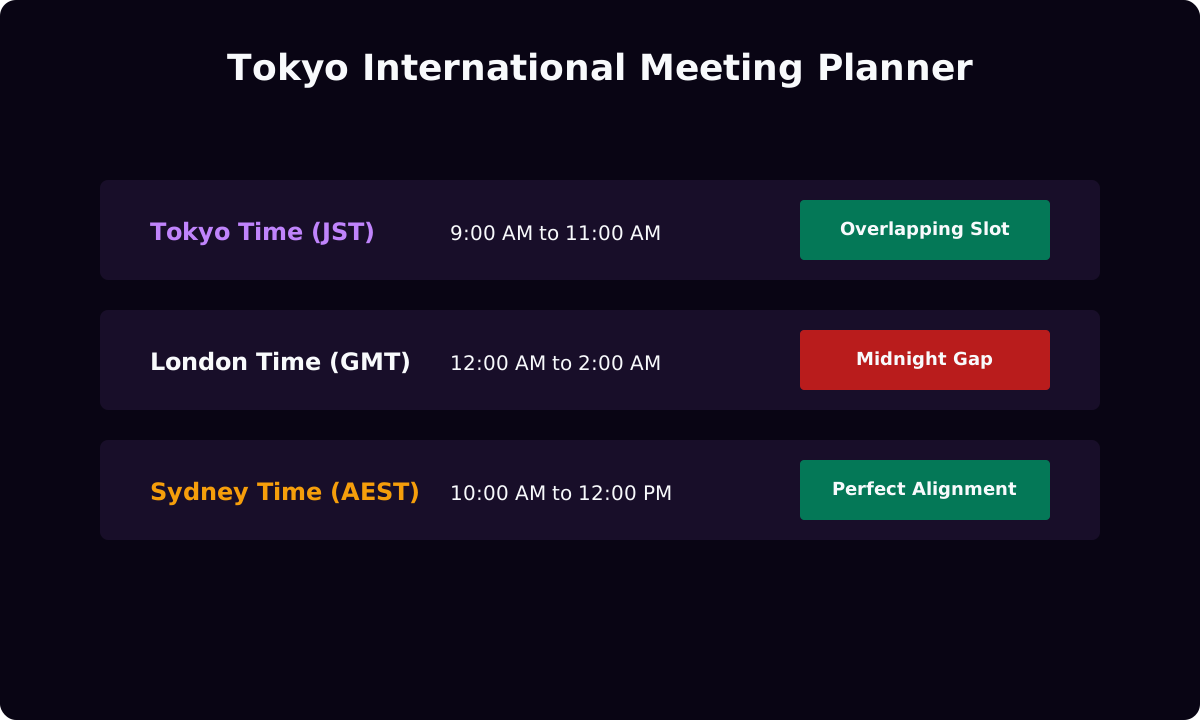
Target 8:00 a.m. to 9:00 a.m. London Time (4:00 p.m. to 5:00 p.m. JST in summer, or 5:00 p.m. to 6:00 p.m. JST in winter) for standard office hour overlap.
Does Tokyo use Military Time?
Yes. The 24-hour clock (military time) is highly standardized in Japanese train schedules (Shinkansen), flight boards, and digital logs to eliminate AM/PM ambiguity.
What is the Role of the NICT in Japan's Time System?
The National Institute of Information and Communications Technology (NICT) maintains Japan's national frequency standards and generates Japan Standard Time using atomic clocks.
How should software databases store Tokyo timestamps?
Store timestamps in UTC. Apply the Asia/Tokyo timezone rule in the user presentation layer to render dates correctly.
Is Tokyo Time the same as Korean Standard Time?
Yes. Korean Standard Time (KST) shares the exact same offset value (UTC+9) year-round, meaning there is zero time difference between Tokyo and Seoul.
Does Tokyo share its offset with Western Australia?
No. Western Australia observes Australian Western Standard Time (AWST, UTC+8), which is 1 hour behind Tokyo year-round.
Explore Time Zone Converters & Guides
Use our free, daylight-saving-aware converters and timezone guides to calculate offsets and plan meetings: